
Category: Festivals & Outdoor Events

Festival production, outdoor events, and large-scale live sound in Colorado.

  • Festival Planning Guide: Outdoor Production Explained

    Festival Planning Guide: Outdoor Production Explained

    Outdoor festivals create a different set of production demands than indoor events. A venue may give planners walls, ceilings, house power, predictable load-in paths, and built-in infrastructure. A festival site asks the production team to build the experience from the ground up.

    That work affects every part of the event, from the way sound reaches the crowd to the way lighting reads after sunset. In our festival planning guide below, we’ll explain the ins and outs of outdoor production, from site layout to sound design, lighting, and more.

    What Outdoor Festival Production Includes

    Outdoor festival production brings together the technical systems, creative design, logistics, and crew support that make a festival work. It includes sound, lighting, staging, rigging, power distribution, video, site communication, and the equipment necessary to operate safely in an open-air environment.

    Production also connects the creative vision to the physical site. A field, fairground, amphitheater, park, or city plaza may look ready for guests, but each space needs a plan for audience flow, stage orientation, sound coverage, backstage access, emergency routes, and technical operations.

    Why Outdoor Events Require a Different Production Plan

    Outdoor festival production equipment rentals support conditions that indoor venues do not create. Wind, sun, uneven terrain, long cable runs, generator placement, weather shifts, noise limits, and limited infrastructure can all affect how the event runs.

    A strong production plan addresses those conditions before the event date. It gives the crew a clear framework for gear selection, site layout, power needs, safety considerations, and show flow. It also helps organizers reduce last-minute changes that can create delays during load-in or show day.

    Site Layout Comes First

    The first thing we’ll explain about outdoor production in our festival planning guide is site layout. The site layout shapes nearly every production decision. Stage placement affects sound direction, lighting visibility, backstage access, guest movement, vendor placement, and emergency access.

    Production teams study the site before they design the system. They look at audience size, sightlines, entrances, exits, terrain, nearby structures, and the distance between key event areas. This process helps the team place technical infrastructure where it supports the event instead of blocking it.

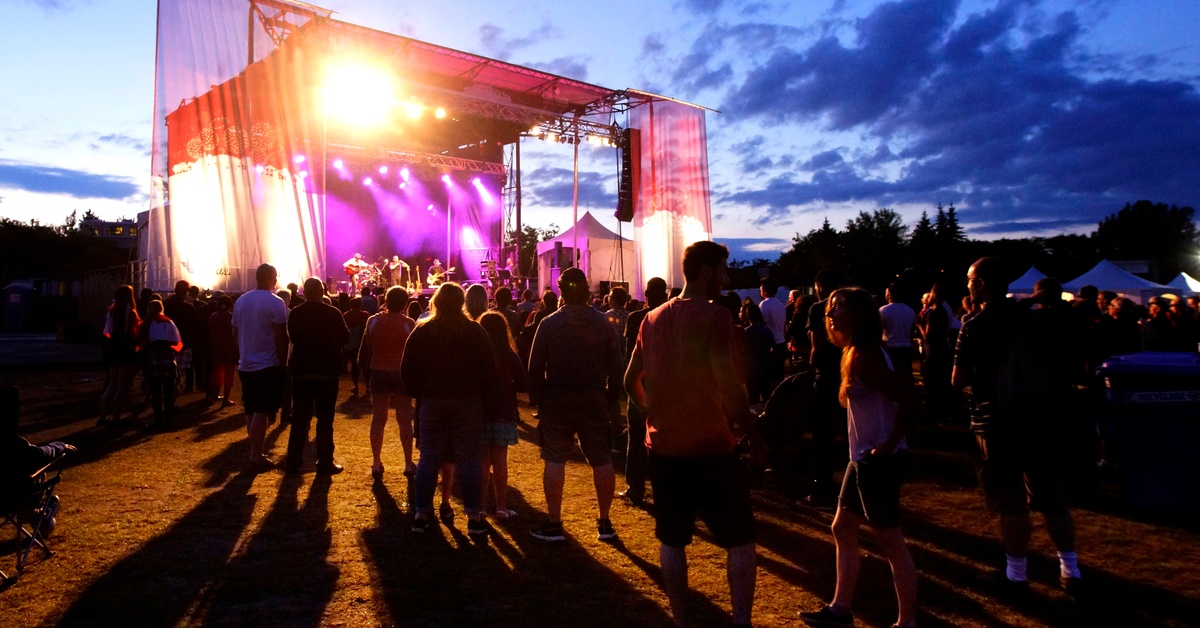
    A woman with short blonde hair and a hoodie touches her headset while holding a PC tablet in front of an outdoor stage.

    Sound Design Must Match the Space

    Outdoor sound requires more than volume. The system must deliver clear audio across the audience area while controlling spill beyond the event footprint. Without walls to contain sound, the production team needs to think carefully about speaker placement, coverage, bass control, and monitoring.

    Line arrays, subwoofers, delays, front fills, and system processing all play a role in the result. The right design helps guests hear performances clearly, whether they stand near the stage or farther back in the crowd.

    Lighting Creates Energy After Sunset

    Lighting gives outdoor festivals structure, mood, and visual impact. During the day, lighting may support stage visibility and branded scenic elements. After sunset, it becomes a major part of the audience experience.

    A lighting plan can include stage washes, moving fixtures, blinders, strobes, lasers, atmospheric effects, and architectural accents. The design should match the scale of the event and the style of the performers. It should also account for rigging limitations, power availability, weather exposure, and operator visibility.

    Video and Scenic Elements Add Scale

    Video walls, projection, scenic pieces, and custom stage elements help large outdoor spaces feel intentional. These features can support artist branding, sponsor visibility, live camera feeds, schedule information, and immersive show design.

    Outdoor video systems need the right brightness, structure, and placement. Production teams should evaluate screen size, pixel pitch, trim height, wind rating, and audience sightlines before recommending a solution.

    Power Planning Protects the Show

    Power supports every technical system at a festival. Sound, lighting, video, backline, vendor areas, ticketing, communications, and backstage operations all rely on a well-planned power structure.

    A production team should calculate power needs for each system, build in headroom, and coordinate safe distribution across the site. Generator placement, fuel logistics, cable paths, grounding, backup power, and load balancing all deserve attention.

    Weather Planning Starts Before Load-In

    Outdoor events must prepare for changing conditions. Heat, cold, rain, lightning, wind, dust, and sudden temperature shifts can affect gear, crew safety, audience comfort, and the show schedule. A production plan should include weather procedures before the first piece of equipment arrives.

    Weather planning may influence stage design, rigging choices, cable protection, equipment covers, ballast, drainage, shade, and contingency timelines. The event team should also decide who has the authority to pause, delay, or resume programming.

    Staging and Rigging Need Site-Specific Review

    Festival stages must support performers, equipment, crew, and environmental loads. The right staging system depends on audience size, performance type, site conditions, roof requirements, trim height, and local rules. A small community event may need a simple stage package, while a multi-day music festival may need a larger structure with extensive rigging.

    Rigging decisions should support both creative design and safety. Lighting, video, audio, banners, scenic elements, and weather-rated structures all add weight and complexity.
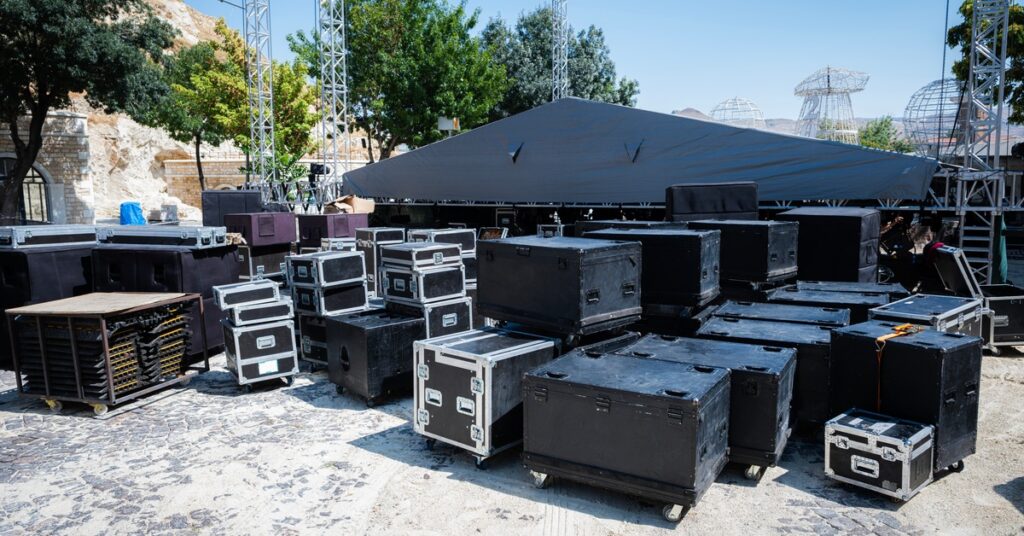
    A view behind the stage of an outdoor festival production with flight cases and sound equipment underneath trusses.

    Multi-Stage Festivals Add Complexity

    A multi-stage festival requires more coordination than a single-stage event. Each stage may need independent sound, lighting, power, backstage space, artist support, and crew coverage. At the same time, the overall event needs a unified plan.

    Production teams must manage sound bleed, schedule overlap, equipment movement, shared resources, and communication between stages. They also need to support artist changeovers without disrupting the audience experience.

    Noise Management Supports the Event and the Community

    Outdoor festivals must balance audience impact with neighborhood and municipal requirements. Sound levels, curfews, stage direction, and low-frequency control can all affect approval, guest satisfaction, and community response. Noise management should enter the conversation during the design stage, not after complaints begin.

    Directional speaker systems, focused bass management, SPL monitoring, and careful stage orientation can help control sound. These choices allow the audience to enjoy a powerful experience while the event team manages off-site impact.

    How to Plan Production Early

    Festival organizers should involve the production team before the event plan becomes fixed. Early input helps shape stage placement, site layout, power strategy, schedule timing, vendor locations, and budget priorities.

    Organizers can prepare by gathering key details before the first production conversation. Event dates, location, expected attendance, stage count, performance schedule, site maps, permit requirements, and creative direction all help the production team build the right plan.

    What to Expect from a Production Partner

    A strong production partner does more than deliver gear. The team should help translate event needs into a complete technical plan. That includes recommending equipment, designing systems, coordinating logistics, supporting safety, and managing execution on-site.

    For outdoor festivals, organizers should look for a partner with experience in open-air environments, large-format sound, lighting design, power coordination, and festival logistics. The team should understand how to build systems around the site, the audience, and the show.

    Build Your Festival With AKA Event Productions

    Outdoor festival production works best when organizers treat the site as a blank canvas with technical demands, creative potential, and logistical limits. Sound, lighting, staging, power, video, weather planning, and crew coordination all shape the final experience.

    AKA Event Productions designs and deploys outdoor event systems for festivals, concerts, municipal events, and large-scale open-air productions. To plan your next festival with a team that understands outdoor scale, contact AKA Event Productions and request a quote.

  • PK Sound vs. d&b audiotechnik: Choosing the Right Line Array for Your Festival

    If you’re speccing a line array for a festival — whether you’re a promoter evaluating bids or a production company deciding what to invest in — PK Sound and d&b audiotechnik come up constantly. Here’s how they compare from a working engineer’s perspective.

    Two Different Design Philosophies

    d&b and PK Sound both make excellent line array systems, but they approach the problem differently. Understanding those differences helps you choose the right tool for your specific deployment.

    d&b audiotechnik is a German manufacturer with decades in touring and installation. Their arrays (SL-Series, V-Series, J-Series, KSL) are known for consistent coverage, sophisticated ArrayProcessing software, and a huge global rental inventory. d&b is the safe choice — widely available, well-documented, familiar to almost every touring engineer.

    PK Sound is a Canadian manufacturer with a different approach — robotic, digitally-steerable arrays. Their Trinity and T10 systems use servo-driven waveguide technology that adjusts coverage electronically rather than mechanically. Fine-tune vertical coverage from the ground — or during the show — without sending riggers up to change splay angles.

    Where PK Sound Shines

    Directional control and noise compliance. PK’s robotic steering allows precise control over where sound goes — and where it doesn’t. For outdoor festivals with noise ordinances and tight property-line requirements, this is a significant advantage. Steer coverage toward the audience and away from residential boundaries without re-rigging.

    Cardioid subwoofer performance. PK’s T218 subs in cardioid deliver strong rear rejection — critical for outdoor sound compliance. Less bass behind the stage means more headroom at FOH without exceeding limits at monitoring points.

    Flexibility for multi-use deployments. If you handle diverse events — festivals, corporate, theater — digitally reconfiguring the array for different geometries without physical changes is a workflow advantage that compounds over time.

    Growing rider acceptance. PK Sound’s presence on festival stages and touring rigs is increasing. d&b still has broader global acceptance, but PK’s footprint is expanding — especially in the festival market where directional control matters most.

    Where d&b Shines

    Rider acceptance and familiarity. d&b is on more touring riders than almost any other line array manufacturer. Hosting nationally touring acts who specify their PA? d&b is more likely accepted without substitution.

    ArrayProcessing software. d&b’s ArrayProcessing is a mature optimization tool that tailors frequency response and coverage to the venue using prediction modeling. One of the best software-based tools in the industry.

    Global availability. d&b has a massive rental network. For large-scale touring and international events, sourcing inventory in almost any market is a logistical advantage.

    Proven track record at the largest scale. d&b systems are deployed at the world’s largest events — from stadium tours to Olympic ceremonies. The institutional confidence is deep.

    Which One for Your Festival?

    For Colorado outdoor festivals where noise compliance is a primary concern, PK Sound’s directional control and cardioid sub performance make it an especially strong choice. Digital steering without re-rigging is a practical advantage when conditions change and compliance margins are tight.

    For large-scale touring events and festivals where rider acceptance is the primary consideration, d&b remains the safer bet for broad compatibility.

    Both are excellent systems. The right choice depends on your deployment, your market, and whether directional control or rider universality matters more.


    AKA Is a PK Sound Rental House

    AKA Event Productions carries a full PK Sound line array inventory — VX10, T10, CX800, and T218 subs — available for festival deployments and B2B sub-rental from our Denver shop. Producing a festival or outdoor event in Colorado? Get in touch.

  • How Sound Compliance Works for Colorado Outdoor Festivals

    If you’re producing an outdoor festival or concert in Colorado, sound compliance isn’t optional — it’s the difference between a successful event and getting shut down mid-show. Here’s how it works, what’s required, and how to stay ahead of it.

    Why Sound Compliance Matters

    Every municipality in Colorado has noise ordinances. For outdoor events — concerts, festivals, county fairs, community celebrations — those ordinances define how loud your event can be, when it needs to stop, and where the measurement points are. Violate them and you’re looking at fines, a shut-down order from the city, or losing your permit for future years.

    The challenge is that most event producers treat sound compliance as an afterthought. They set up the PA, turn it up until the crowd is happy, and hope nobody complains. That’s a gamble you don’t need to take.

    How Noise Ordinances Work in Colorado

    Colorado doesn’t have a single statewide noise standard for events. Each municipality and county sets its own rules. Some use dB(A) limits measured at the property line. Some measure at the nearest residence. Some have different limits for daytime vs. nighttime. Some require a noise permit in addition to your event permit.

    For event producers: understand the noise regulations for your event’s jurisdiction before you design the sound system — not after. The regulations determine how you aim speakers, how much subwoofer energy you can deploy, and what monitoring you need.

    Sound Propagation Analysis — The Proactive Approach

    This is where most production companies stop at “we’ll keep it under the limit.” A sound propagation analysis goes further — modeling how sound travels from your stage to the surrounding area, accounting for speaker type, aiming, distance, topography, structures, wind, and monitoring positions.

    The result: a technical document showing predicted sound levels at key measurement points — property lines, nearest residences, regulatory monitoring positions. Submit this with your permit application to demonstrate compliance before the event. That changes the conversation from “we hope it’s not too loud” to “here’s exactly what the levels will be.”

    For producers working with municipalities that are nervous about noise, this documentation is often the difference between getting a permit approved and having it denied or buried in conditions.

    Cardioid Subwoofer Configurations

    Low-frequency sound (bass) is the primary driver of noise complaints from outdoor events. Bass travels further than high-frequency content, passes through structures more easily, and is harder to control with conventional subwoofer deployments.

    Cardioid subwoofer configurations solve this by using multiple subs arranged and processed to focus bass energy forward while canceling it behind the stage. The audience gets full low-frequency impact, but energy radiating toward neighborhoods is reduced by 15–20 dB or more.

    This isn’t exotic technology — it’s standard practice for any production company that takes outdoor compliance seriously. AKA deploys PK Sound T218 subwoofers in cardioid configuration for this purpose. If your production company isn’t talking about cardioid subs for your outdoor event, they’re not thinking about compliance.

    Real-Time Monitoring During the Event

    Pre-event modeling gets you the permit. Real-time monitoring keeps you in compliance. Place measurement microphones at designated positions (usually property line or nearest residence) and track levels throughout the event.

    The FOH engineer should have real-time visibility into these levels to make adjustments before a complaint — not after. Wind changes, sets vary in loudness, crowd noise shifts the picture. Active monitoring keeps you ahead of it.

    What to Include in Your Sound Management Plan

    If your municipality requires a sound management plan (many do above a certain size), include: sound system design and speaker placement, predicted levels at monitoring positions, monitoring methodology and equipment, escalation procedures if levels exceed targets, contact info for the production manager and FOH engineer, and a curfew compliance plan.


    Planning an Outdoor Event in Colorado?

    AKA Event Productions provides sound propagation analysis, cardioid subwoofer deployments, and sound compliance consulting for outdoor festivals across Colorado. We help you get permitted, stay compliant, and deliver a show that sounds great. Get in touch to talk about your event.