

Category: Pro Audio

Professional audio engineering, sound system design, and live sound tips.

  • Why Professional Production Equipment Matters

    Why Professional Production Equipment Matters

    Successful events depend on more than a strong concept and a well-planned schedule. The equipment supporting the experience must perform reliably from the moment guests arrive until the event ends. Audio systems, lighting fixtures, video displays, staging components, and power distribution all influence how smoothly a program runs.

    Professional production equipment matters because it gives teams the tools they need to deliver consistent results in demanding environments. It also helps protect the quality of the experience when schedules tighten, venues present challenges, or audiences expect a polished presentation.

    Professional Equipment Creates a Stronger Foundation

    Every event places different demands on its technical setup. A corporate meeting may require clear speech reinforcement and presentation displays, while a gala may rely heavily on lighting, staging, and music to create atmosphere. Large gatherings introduce additional considerations involving sightlines, sound coverage, power, and equipment placement.

    Professional-grade systems suit these specific conditions. They provide the performance capabilities production teams need to build an event around the venue, audience size, program format, and technical requirements rather than forcing the event to work around limited equipment.

    Production Equipment for Events Supports Reliable Performance

    Reliable production equipment for events helps reduce the technical uncertainty that can disrupt a live program. Speakers must deliver clean, intelligible sound. Video systems must display content clearly, and lighting fixtures must respond consistently throughout the event.

    Professional equipment also gives technicians greater control over how each system performs. That control matters because event conditions can change quickly. A room may fill with more guests than expected, natural light may affect video visibility, or the program may shift during the event.

    Audio Quality Shapes Communication

    Poor audio can weaken an event even when every other element looks smooth. Guests should be able to understand a keynote speaker, panel discussion, announcement, or video without straining to hear.

    Professional audio systems give production teams greater flexibility to manage volume, coverage, microphones, mixing, and signal distribution. Proper equipment selection also helps technicians account for the size and acoustics of the venue rather than relying on a one-size-fits-all setup.

    Clear sound keeps attention on the program. It also allows presenters to communicate with confidence because they do not have to compete with feedback, inconsistent volume, or weak coverage.
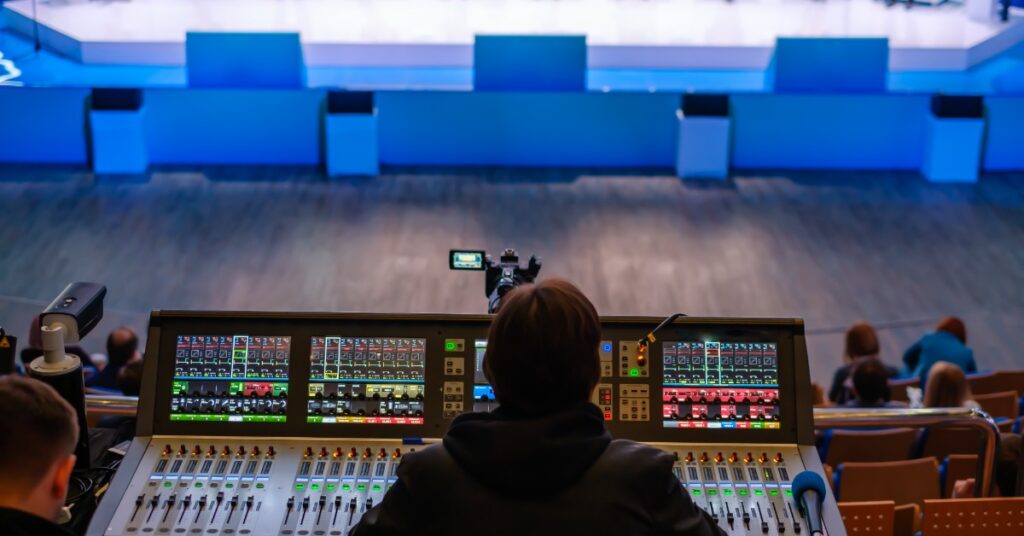
    A view from behind of a video/audio engineer at a professional console in front of a stage with many seated speakers.

    Lighting Controls What Guests See and Feel

    Lighting does more than make a stage visible. It directs attention, creates visual depth, supports photography and video, and helps establish the atmosphere of a room.

    Professional lighting systems allow a production team to shape different parts of the event with precision. A general session may need bright, balanced stage lighting, while an evening reception may benefit from more dramatic architectural or decorative effects.

    The ability to adjust lighting throughout the program also supports smooth transitions. Changes in intensity, direction, or focus can signal a new speaker, highlight a performance, or shift the mood without interrupting the flow of the event.

    High-Quality Video Connects Audiences

    Professional production equipment matters because video has become central to many live events. Presentations, sponsor content, remote speakers, graphics, recorded media, and live camera feeds may all share the same visual system.

    Professional displays and video equipment ensure that content remains visible throughout the venue. Screen size, resolution, brightness, placement, and signal routing all affect whether guests can follow what is happening.

    Video equipment also must work as part of a larger production system. Cameras, computers, switchers, displays, and playback devices must communicate reliably so the audience sees the correct content at the correct moment.

    Staging Gives the Program a Physical Focus

    The stage establishes where guests should direct their attention. Its size, height, configuration, and surrounding production elements influence both the appearance of the event and the way presenters interact with the audience.

    Professional staging components allow production teams to create a platform suitable for the room and program. A panel discussion requires a different arrangement than an awards ceremony, concert, or executive presentation.

    Staging also must integrate with lighting, audio, video, scenic pieces, and other technical elements. When those components work together, the stage feels like a deliberate part of the event rather than a collection of separate pieces of equipment.

    Professional Equipment Helps Teams Adapt to the Venue

    Venues rarely offer identical production conditions. Ceiling height, room dimensions, loading access, available power, acoustics, and existing infrastructure can change significantly from one location to another.

    Professional equipment gives production teams more options when adapting a technical plan to those conditions. They can select systems that fit the available space, distribute sound appropriately, position displays for better visibility, and build staging around the room rather than against it.

    This flexibility also becomes valuable when an event uses multiple spaces. General sessions, breakout rooms, receptions, and outdoor areas may each require their own technical approach while still feeling connected to the larger event.

    Redundancy Can Protect Critical Moments

    Live events leave little room for technical interruptions. A microphone failure during a keynote or a lost video signal during an important presentation can immediately affect the audience experience.

    Professional production planning can include backup equipment and alternative signal paths for critical systems. The exact approach depends on the event, but having appropriate equipment available gives technicians more ways to respond when something unexpected happens.
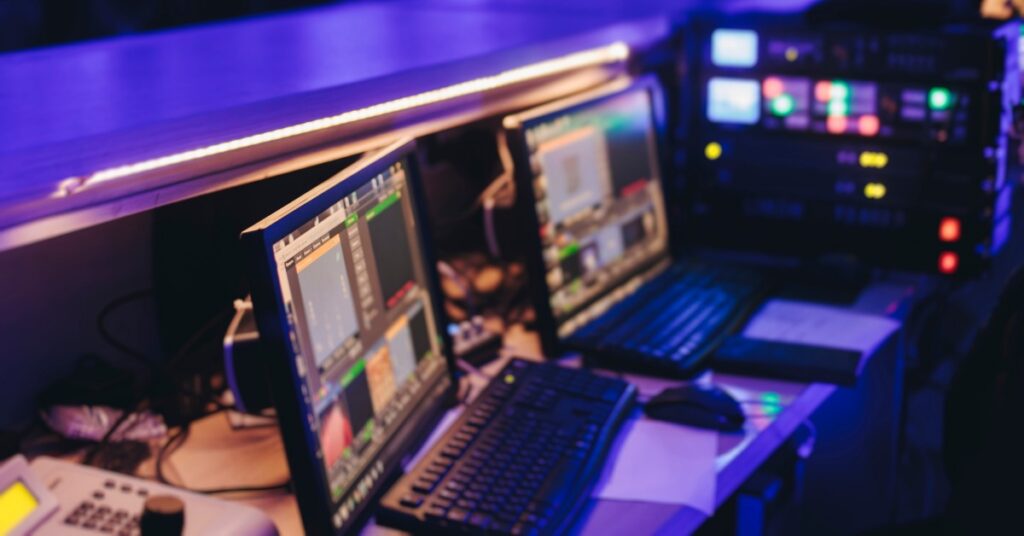
    A view of the mixing console with multiple desktop displays at a live event, illuminated by dark stage lights.

    The Right Equipment Supports a More Polished Experience

    Guests may never think about the technical equipment when everything works correctly. They notice clear sound, visible presentations, smooth transitions, balanced lighting, and a stage that looks appropriate for the occasion.

    Those details contribute to the overall credibility of an event. A polished technical environment can make presentations easier to follow and entertainment more engaging while reinforcing the level of preparation behind the program.

    Equipment and Technical Expertise Work Together

    Even advanced equipment has little value without someone who understands how to configure and operate it. Events require technicians to make decisions based on the venue, run of show, audience, and changing conditions during the program.

    A professional production team can evaluate what the event requires before selecting equipment. That process helps avoid setups that are unnecessarily complicated or technically inadequate.

    Professional Equipment Can Simplify Event Planning

    Technical planning involves many interconnected decisions. Audio requirements influence microphone selection and speaker placement. Stage design can affect lighting positions, while screen locations may change seating layouts or sightlines.

    Working with professional equipment gives planners a clearer framework for those decisions. Production teams can build systems around the event plan, identify potential conflicts before show day, and coordinate technical elements as part of one larger setup.

    Build Your Event on Reliable Production Equipment

    Professional production equipment helps create the technical foundation behind a smooth, engaging event. Reliable audio keeps communication clear, lighting shapes the environment, video connects audiences with content, and staging gives the program a strong visual center.

    The right equipment also gives production teams the flexibility to respond to venue conditions and changing program requirements. When professional technology works alongside experienced technical support, every element has a better chance of performing as it should.

    If you are planning an event and need dependable technical equipment, explore the equipment rental options available from AKA Event Productions to start building a production setup that fits your event.

  • 5 Signs Your Venue Needs a Sound System Upgrade

    Most venue owners don’t realize their sound system is costing them business until someone tells them. Here are five signs it’s time to call an engineer — not just buy new speakers.

    1. Your Staff Constantly Adjusts the Volume

    If your bartenders are reaching for the volume knob every time a different act goes on stage, or your servers are fielding “it’s too loud” and “we can’t hear” complaints at the same time, the problem isn’t the volume — it’s the system design. Properly designed venue systems have zoned coverage that lets the stage be loud while the bar stays conversational. If yours doesn’t do this, it was designed wrong.

    2. Feedback Happens More Than Occasionally

    Feedback is not normal. If your system rings, squeals, or feeds back during every show, there’s an underlying problem — usually poor speaker placement relative to microphone positions, inadequate system EQ, or both. A properly tuned system with correct speaker placement eliminates feedback as a regular occurrence.

    3. The System Was Installed More Than 10 Years Ago

    Speaker technology, DSP capabilities, and amplifier efficiency have all advanced significantly in the last decade. A system installed in 2014 might still technically work, but it’s working harder to deliver less. Modern systems are more efficient, sound better at lower volumes, and offer network-based DSP control that makes system management dramatically easier for your staff.

    4. Performers Complain About Monitor Sound

    If touring acts or local performers consistently struggle with stage sound, your monitor system is either inadequate, poorly placed, or fighting the main PA. Performers who have a bad monitor experience don’t come back — and they tell other performers. This directly impacts your booking pipeline.

    5. Nobody on Staff Knows How to Operate It

    If your sound system requires a “sound guy” who’s the only person who knows how to make it work, that’s a design failure. Modern venue systems can be designed with user-friendly presets, simplified mixing interfaces, and automated DSP that lets trained staff operate the system reliably without needing a dedicated audio engineer on every shift.

    What a Proper Upgrade Looks Like

    A professional system redesign starts with a site visit — walking the room, understanding the programming, measuring the acoustics, and talking to the people who actually use the system every day. From there, the design process accounts for speaker placement based on room geometry and acoustic treatment, DSP programming for multiple use scenarios (live music, DJ nights, spoken word, background music), monitor systems that work with the main PA instead of against it, and staff training so your team can operate the system confidently.

    The goal isn’t just “louder” — it’s a system that sounds good at every volume, covers the room evenly, and works reliably without requiring an audio engineer on staff.


    Ready for a Site Visit?

    AKA provides on-site consultations for Denver-area venues. We’ll assess your current system, discuss your goals, and give you a straight recommendation — whether that’s a full redesign, targeted upgrades, or just a proper tune-up.

  • Why Denver Production Companies Are Cross-Renting PK Sound Instead of Buying

    PK Sound line arrays are showing up on more riders and RFPs than ever — but not every production company needs to own a full system. For many Denver-area companies, cross-renting from a local rental house is the smarter play.

    The Rider Problem

    You’ve landed a festival contract or a touring act is coming through, and the rider specifies PK Sound. You don’t carry PK. Now you’re flying gear in from out of state, paying freight both ways, hoping it arrives on time and working.

    Or call a local rental house with VX10s, CX800 subs, and T218 subs sitting in a shop 20 minutes from your venue.

    What’s Available for Cross-Rental in Denver

    AKA Event Productions maintains a touring-grade PK Sound inventory for B2B sub-rental: VX10 line array elements, CX800 subwoofers for ground-stacked or flown configurations, T218 subs configurable in cardioid for noise-sensitive deployments, and CX215 outfills.

    Beyond PK Sound: Allen & Heath dLive consoles with DL32 stage boxes, Shure Axient Digital wireless, Chauvet Maverick Force X Spot and Force 2 BeamWash, grandMA3 onPC lighting control, Chauvet Color Strike M LED strobe/wash, and MasterFX Mystic Hazer atmospherics.

    Everything ships in ProX TruckPaX road cases — touring-grade transport, not rental house afterthoughts.

    Why Cross-Rent Instead of Buy?

    Capital efficiency. A full PK Sound system is a six-figure investment. Deploying 15–20 times a year? Ownership makes sense. 3–5 times a year for specific riders? Cross-rental keeps capital free for gear you use every week.

    Maintenance is someone else’s problem. Firmware updates, driver replacements, rigging inspections, road case repairs — handled by the rental house. Gear maintained to touring spec without shop overhead.

    No freight. Local cross-rental means local delivery. No truck rolls from LA or Nashville, no weather delays, no customs for Canadian-manufactured gear.

    Flexible terms. B2B pricing, weekend rates, multi-day discounts, dry rental or full-service options. Terms built for production companies, not consumers.

    How It Works

    Straightforward: call or email with dates, venue, and system requirements. AKA confirms availability, provides a B2B quote, and can deliver or arrange pickup from Denver. For touring acts, we also provide local crew, system tech, or full FOH/monitor engineering as part of the rental.

    All gear ships current firmware, tested and prepped. Subs include rigging hardware. Consoles ship with show files if requested.


    Check Availability

    Need PK Sound for an upcoming show? Call or email to check dates and get a B2B quote.

    AKA Event Productions — PK Sound Rental House — 6232 Beach St, Denver, CO 80221

  • PK Sound vs. d&b audiotechnik: Choosing the Right Line Array for Your Festival

    If you’re speccing a line array for a festival — whether you’re a promoter evaluating bids or a production company deciding what to invest in — PK Sound and d&b audiotechnik come up constantly. Here’s how they compare from a working engineer’s perspective.

    Two Different Design Philosophies

    d&b and PK Sound both make excellent line array systems, but they approach the problem differently. Understanding those differences helps you choose the right tool for your specific deployment.

    d&b audiotechnik is a German manufacturer with decades in touring and installation. Their arrays (SL-Series, V-Series, J-Series, KSL) are known for consistent coverage, sophisticated ArrayProcessing software, and a huge global rental inventory. d&b is the safe choice — widely available, well-documented, familiar to almost every touring engineer.

    PK Sound is a Canadian manufacturer with a different approach — robotic, digitally-steerable arrays. Their Trinity and T10 systems use servo-driven waveguide technology that adjusts coverage electronically rather than mechanically. Fine-tune vertical coverage from the ground — or during the show — without sending riggers up to change splay angles.

    Where PK Sound Shines

    Directional control and noise compliance. PK’s robotic steering allows precise control over where sound goes — and where it doesn’t. For outdoor festivals with noise ordinances and tight property-line requirements, this is a significant advantage. Steer coverage toward the audience and away from residential boundaries without re-rigging.

    Cardioid subwoofer performance. PK’s T218 subs in cardioid deliver strong rear rejection — critical for outdoor sound compliance. Less bass behind the stage means more headroom at FOH without exceeding limits at monitoring points.

    Flexibility for multi-use deployments. If you handle diverse events — festivals, corporate, theater — digitally reconfiguring the array for different geometries without physical changes is a workflow advantage that compounds over time.

    Growing rider acceptance. PK Sound’s presence on festival stages and touring rigs is increasing. d&b still has broader global acceptance, but PK’s footprint is expanding — especially in the festival market where directional control matters most.

    Where d&b Shines

    Rider acceptance and familiarity. d&b is on more touring riders than almost any other line array manufacturer. Hosting nationally touring acts who specify their PA? d&b is more likely accepted without substitution.

    ArrayProcessing software. d&b’s ArrayProcessing is a mature optimization tool that tailors frequency response and coverage to the venue using prediction modeling. One of the best software-based tools in the industry.

    Global availability. d&b has a massive rental network. For large-scale touring and international events, sourcing inventory in almost any market is a logistical advantage.

    Proven track record at the largest scale. d&b systems are deployed at the world’s largest events — from stadium tours to Olympic ceremonies. The institutional confidence is deep.

    Which One for Your Festival?

    For Colorado outdoor festivals where noise compliance is a primary concern, PK Sound’s directional control and cardioid sub performance make it an especially strong choice. Digital steering without re-rigging is a practical advantage when conditions change and compliance margins are tight.

    For large-scale touring events and festivals where rider acceptance is the primary consideration, d&b remains the safer bet for broad compatibility.

    Both are excellent systems. The right choice depends on your deployment, your market, and whether directional control or rider universality matters more.


    AKA Is a PK Sound Rental House

    AKA Event Productions carries a full PK Sound line array inventory — VX10, T10, CX800, and T218 subs — available for festival deployments and B2B sub-rental from our Denver shop. Producing a festival or outdoor event in Colorado? Get in touch.